
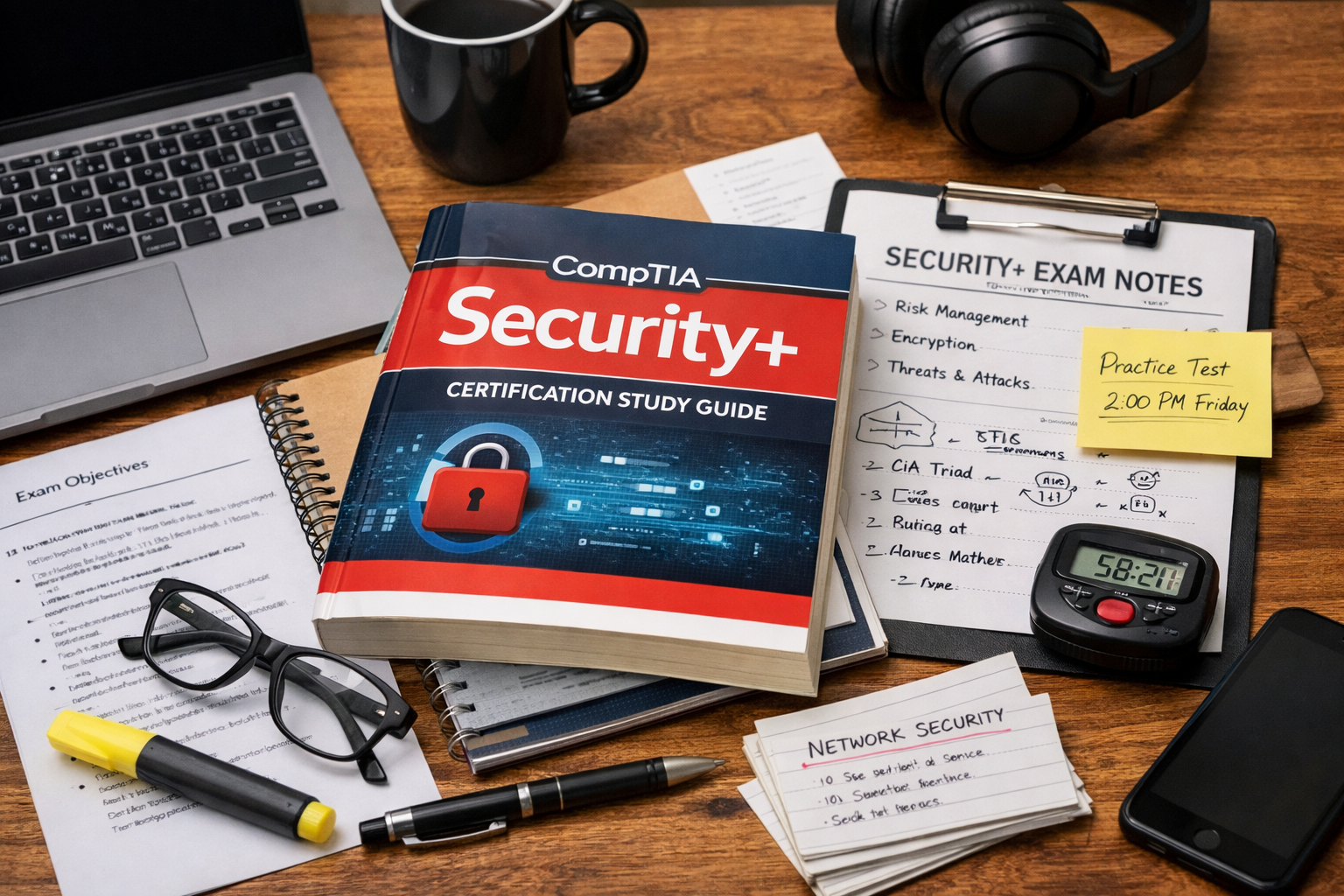
What Is CompTIA Security+? A Complete, Honest Guide for Certification Seekers
CompTIA Security+
The CompTIA Security+ certification is often recommended as a starting point for cybersecurity careers, but many people aren’t sure what it actually prepares them for or whether it’s the right move for their situation.
This guide explains what Security+ is, who it’s best for, how difficult it really is, how long it takes to prepare, and how it fits into real career paths in both private and public sector environments.
This is not a hype piece. The goal is to help you decide whether Security+ makes sense before you invest time and money.
What CompTIA Security+ Is
CompTIA Security+ is a vendor-neutral cybersecurity certification that validates foundational security knowledge across systems, networks, and environments.
It focuses on core security principles rather than specific tools or vendors. Because of this, it’s widely recognized across many industries and organizations.
Security+ covers topics such as:
- Threats, attacks, and vulnerabilities
- Network and system security concepts
- Identity and access management
- Risk management and governance
- Incident response and basic security operations
From a difficulty standpoint, Security+ is generally considered entry-level to early-intermediate.
Who This Certification Is Best For
Security+ is a good fit if you are:
- New to cybersecurity and want a recognized baseline credential
- Working in IT and looking to transition into security roles
- Pursuing government, defense, or regulated industry IT positions
- Building a foundation before advanced cybersecurity certifications
This certification is commonly used as a starting point rather than an end goal.
Who Should Probably Skip Security+
Security+ may not be the best use of time if you:
- Already have deep hands-on cybersecurity experience
- Are targeting senior-level security architecture or leadership roles immediately
- Expect a certification alone to guarantee a job
- Prefer highly specialized or vendor-specific certifications
In these cases, more advanced or targeted certifications may offer better value.
Exam Format and Difficulty (Realistic View)
The Security+ exam typically includes up to 90 questions and lasts 90 minutes. Question types include multiple choice and performance-based scenarios.
Most candidates rate the difficulty between 6 and 7 out of 10.
The exam is not primarily about memorization. The challenge comes from:
- Interpreting scenario-based questions
- Applying concepts instead of recalling definitions
- Managing time under pressure
People with hands-on IT experience usually find the exam more manageable.
Realistic Time and Effort Estimates
How long Security+ takes depends heavily on background.
Typical preparation timelines:
- IT background: 3–6 weeks
- Career switcher: 2–3 months
- No technical background: 3–4 months
Most successful candidates study between 6–10 hours per week. Cramming without understanding concepts usually leads to failure.
Recommended Study Order
One of the biggest mistakes people make is studying out of order.
A more effective approach:
- Review official exam objectives to understand scope
- Learn core security concepts without using practice exams
- Reinforce learning with scenario-based questions
- Identify weak domains and revisit fundamentals
- Light review and exam strategy preparation before test day
Practice exams should support learning, not replace it.
Common Mistakes That Cause People to Fail
Some of the most common issues include:
- Relying too heavily on memorization
- Starting practice exams too early
- Ignoring hands-on exposure completely
- Underestimating scenario-based questions
- Poor time management during the exam
Security+ rewards understanding how security concepts apply in real situations.
Career and ROI Context (Beyond Salary)
Security+ does not automatically lead to a cybersecurity job.
Where it helps most:
- Meeting baseline job requirements
- Getting past HR or compliance filters
- Supporting entry-level or transitional roles
- Government and defense environments
Where it helps less:
- Senior-level promotions
- Highly specialized security roles
- Roles requiring deep technical expertise
Security+ works best when paired with hands-on experience, labs, or real-world exposure.
What Certification Should You Take After Security+?
Security+ is often a stepping stone.
Common next steps:
- For deeper cybersecurity focus: intermediate security certifications
- For management or compliance paths: governance-focused certifications
- For technical depth: platform-specific or hands-on security certs
Your next certification should align with the role you want, not just the hardest exam available.
Quick Decision Summary
Difficulty: Moderate
Time to Prepare: 1–3 months for most people
Best For: Entry-level and transitioning professionals
Government Friendly: Yes
Worth It If: You need baseline cybersecurity validation and career flexibility
Final Verdict
CompTIA Security+ is a solid foundational certification when used for the right purpose.
It’s not a shortcut into cybersecurity, but it is a widely recognized starting point that helps establish credibility, especially in government and compliance-focused environments.
If your goal is to build a long-term career in cybersecurity or IT security, Security+ can be a practical first step when paired with real skills and experience.
Frequently Asked Questions
Do I need experience before taking Security+?
Experience helps, but it’s not required. Many beginners pass with proper preparation.
Can I pass Security+ without labs or hands-on practice?
Yes, but hands-on exposure significantly improves understanding and confidence.
How long is the Security+ certification valid?
Security+ requires renewal through continuing education or recertification.
What happens if I fail the exam?
You can retake the exam after waiting periods, but retakes cost additional fees.